The athlete's maximum throwing velocity from an infield position in the given event year. Measured in miles per hour (MPH).
77.0
60 Yard Dash
The athlete's fastest 60-yard dash time in the given event year. Measured in seconds (s)
7.82
Infield Velocity
The athlete's maximum throwing velocity from an infield position in the given event year. Measured in miles per hour (MPH).
74.0
Power / Speed Score
A simple calculation that divides the athlete’s Exit Velocity Max by the athlete’s 60 Yard Dash time for the given event year. For example, 98 MPH / 7.00s = 14.00.
12.3
60 Yard Dash
The athlete's fastest 60-yard dash time in the given event year. Measured in seconds (s)
7.50
Infield Velocity
The athlete's maximum throwing velocity from an infield position in the given event year. Measured in miles per hour (MPH).
79.0
Power / Speed Score
A simple calculation that divides the athlete’s Exit Velocity Max by the athlete’s 60 Yard Dash time for the given event year. For example, 98 MPH / 7.00s = 14.00.
A fastball with hop has a flat approach angle and visually jumps through the zone. When thrown up in the zone, it is more likely to generate a higher swing and miss average. Hop+ of 100 is MLB average.
Fastball
Sink+
A fastball with sink has low backspin and drops through the strike zone. When thrown down in the zone, it is more likely to generate a higher ground ball percentage and lower launch angle. Sink+ of 100 is MLB average.
Fastball
Rise+
A fastball with rise has a high percentage of backspin. When thrown up in the zone, it is more likely to generate a higher fly ball percentage. Rise+ of 100 is MLB average
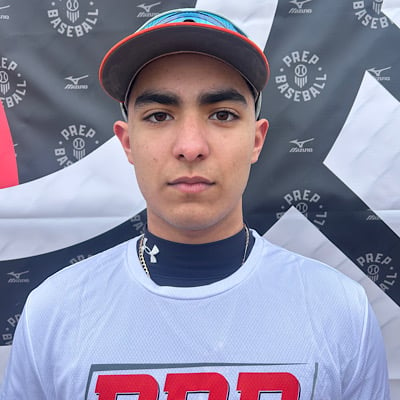
We've seen Miranda a few times since last Fall, and he's got a chance to garner college attention by this Fall. Checking in at 5-foot-10, 182-pounds, Miranda has a nice swing with some strength behind it. His hands stay loose and he gets good whip out of his barrel, reaching a peak exit velocity of 90.8 mph and an impressive carry distance of 338 feet. Some of his swings were loud, and he does a good job of creating a consistent launch angle. Defensively the 2026 grad is likely bound for corner infield, though it could play at second base. His hands work and he picks it confidently, keeping his glove quiet throughout. A good pickup for colleges in the 2026 class, he's a bat-first player that we'll keep an eye on this season.
10/11/24
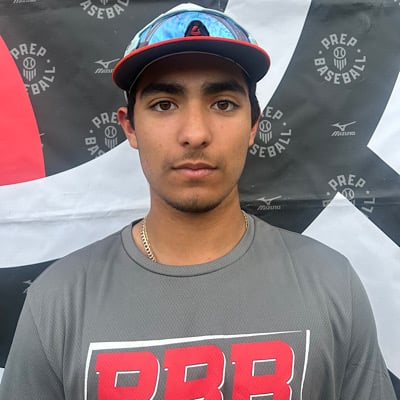
A versatile player by trade, Miranda had one of the better days. On the offensive side, he shows good barrel control, he's long through his finish, and drove the ball to all fields, running up his EV to 91.8. His actions on the infield worked as well, simple & through the ball, reaching a max arm velocity of 73 mph. He finally stepped on the mound and competed in the zone with four pitches and easy actions.
Draft Reports
Contact
Premium Content Area
To unlock contact information, you need to purchase a ScoutPLUS subscription.
We've seen Miranda a few times since last Fall, and he's got a chance to garner college attention by this Fall. Checking in at 5-foot-10, 182-pounds, Miranda has a nice swing with some strength behind it. His hands stay loose and he gets good whip out of his barrel, reaching a peak exit velocity of 90.8 mph and an impressive carry distance of 338 feet. Some of his swings were loud, and he does a good job of creating a consistent launch angle. Defensively the 2026 grad is likely bound for corner infield, though it could play at second base. His hands work and he picks it confidently, keeping his glove quiet throughout. A good pickup for colleges in the 2026 class, he's a bat-first player that we'll keep an eye on this season.
A versatile player by trade, Miranda had one of the better days. On the offensive side, he shows good barrel control, he's long through his finish, and drove the ball to all fields, running up his EV to 91.8. His actions on the infield worked as well, simple & through the ball, reaching a max arm velocity of 73 mph. He finally stepped on the mound and competed in the zone with four pitches and easy actions.