
2026 MLB Draft: All Undervalued Team
July 8, 2026

Branch Rickey was the pioneer of scouting and one of the best to ever do it. But even he misjudged from time to time. The same applies to today’s scouting industry – everyone misses.
In 2018 Tarik Skubal (Seattle) was coming off surgery and was selected in the ninth round. That same year Cal Raleigh (Florida State) and Jeremy Pena (Maine) were both chosen in the third round, Steven Kwan (Oregon State) in the fifth, Drew Rasmussen (Oregon State) in the sixth, Jarren Duran (Long Beach State) and Joe Ryan (Stanislaus State) and Brendan Donovan (South Alabama) in the seventh and Lars Nootbar (Southern Cal) in the eighth. All of the above have produced at least 10 WAR in their Major League careers, a benchmark only five of the top 58 picks in that year’s draft have reached to date. Yes, only five of the first 58 picks in 2018 have produced a 10 WAR or greater while nine selected in the third through tenth rounds have achieved this level.
And most recently, Sam Antonacci (Coastal Carolina) already looks like a steal in the fifth round of 2024 (D1Baseball had him ranked as a third-rounder). Needless to say, the list of those exceeding expectations from their draft position grows every year, and 2026 will be no different.
And several notables from our 2025 All-Undervalued Team include Zane Taylor (UNC Wilmington/5th round A’s), Sawyer Hawks (Vanderbilt/6th/D’Backs), Luke Dotson (Mississippi State/11th/D’Backs), Boston Smith (Wright State/6th/Nationals), Colby Shelton (Florida/6th/White Sox), Jake Munroe (Louisville/4th/Angels), Anthony DePino (Rhode Island/7th/White Sox) and Trevor Cohen (Rutgers/3rd/Giants).
For our Team we’ve used a variety of industry sources and compared those opinions to our current prospect rankings. If there was a significant gap in rankings, or dollar value as a top two round talent, that prospect is eligible for selection to our team.
2026 MLB Draft: All-Undervalued Team
Daniel Jackson, C, Georgia- The recently crowned Golden Spikes Award winner and D1Baseball POY is not currently projected to be chosen inside the first 30 picks. In 2026 he became the first D1 catcher to hit 25 homers and steal 25 bases. He also slashed his K-rate down significantly (19% in 2026), but admittedly, less than desirable in-zone whiff rates hold back his profile. As underscored by his base-stealing abilities, Jackson is a great athlete for the position though he's not a slam-dunk pro catcher, which further adds to the first-round doubts. However, he was just too good this year to be left out of the first round. Jackson claimed the triple crown in the best conference in college baseball after slashing .396/.492/.837 with 32 home runs and a program record 87 RBIs. We think he'll be too hard to pass on after the first 20 picks go by.
Cade Townsend, RHP, Ole Miss- A draft-eligible sophomore, Townsend’s value is clouded somewhat by his exclusion from the bump during Ole Miss’ postseason run to Omaha. He did not pitch in Supers or the CWS. Added to the fact that his college career has been just two seasons, totaling less than 100 innings and he only played high school baseball his senior year, his track record is more mysterious than usual. However, there’s no doubt about his stuff – it’s elite. Not quite Gage Wood (Arkansas) good, but still very high level and worthy of the top 30 overall picks, which is well above the current second round projection by the industry.
Carson Wiggins, RHP, Arkansas- Pitching just 14 innings as a true freshman in 2025, the 6-foot-5 righthander missed all of the 2026 season while recovering from Tommy John surgery. He returned to throw a handful of bullpens in May and again at the MLB Combine in June where he played catch at 95-97 mph. Currently projected as a late second to early third round pick, the draft-eligible sophomore could return to Fayetteville where he has top half of the first round upside in 2027.
Jason DeCaro, RHP, North Carolina- We haven’t been shy at any point with our love for DeCaro. A winner and performer, he’s underrated at all levels. His fastball does run a bit on the straighter side, but he’ll touch 96, spins two different better than average breaking balls to go along with an effective changeup. The industry projects DeCaro as a fourth round talent, but he’s squarely in late second to early third round consideration for us.
Macon Winslow, C, North Carolina- Despite a late season hand injury and resulting slump at the plate, Winslow finished with a .282 batting average, along with 14 doubles, ten home runs and more walks (48) than strikeouts (46). Although the 6-foot, 200-pound righthanded hitter struggled against 90+ fastballs, especially late in the season, he combines power (111.9 max EV) and plate discipline in the batter’s box with improving skills behind the plate. Not projected to be chosen in the top five rounds, here’s a vote for Winslow in the fourth.
Justin Byrd, RHP, Georgia- Hyped early in the spring as a top three rounder, his value dropped later in the year as the effectiveness of both his slider and changeup backed up. However, for the season Byrd averaged 94.3 mph on his fastball to go along with his two average to better secondaries. He’s also a strike-thrower who filled the zone at a 69% (91st percentile) clip with all of his pitches. At 22 years of age, Byrd may not be a top three rounder, but he’s certainly better than an “after the fifth” talent.
Hudson Barrett, LHP, Oklahoma State- Possessing an injury history, team doctors may have more to say than scouts, but there’s little doubt Barrett has the talent to be considered in the top five rounds. In our opening weekend look at Globe Life Field the 6-foot lefthander sat 91-94 with a plus changeup.
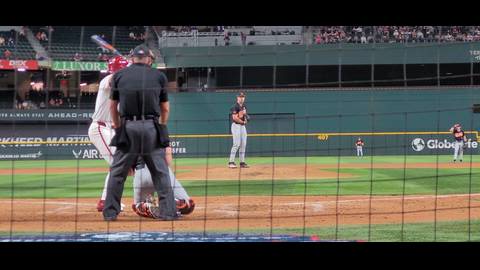
Rob Evans, LHP, Miami- The senior lefthander posted 10 wins and a 3.29 ERA in 88 innings this spring for the Hurricanes. He also struck out 98 against 31 walks posting a 1.12 WHIP. His stuff isn’t overwhelming, but is plenty good with a 91-95 fastball and two whiff-producing secondaries in his slider and changeup.
Nu'u Contrades, 2B, Arizona State- Fully healthy in 2026, Contrades blasted 21 home runs and drove in 61 for the Sun Devils. At 5-foot-10, 180 pounds he generates plus bat speed that produced a max EV of 112.4 mph this spring. With just a 8.3% walk rate he’ll need to tone down his overaggressive approach at the plate in pro ball, but there’s no denying the damage he’s capable of producing. Defensively, he’s well suited for second base with above average range, sure hands and the ability to make the occasional spectacular play.
Jarren Purify, 2B, Clemson- Purify missed a month of his spring season with a broken bone in his hand after getting hit by a pitch. He returned in early May and proceeded to produce a career-high slash line (.344/.454/.534) in 40 games. He continued to shine in the MLB Draft League this summer where he has posted a .316 average with four home runs (second in the league) in 47 at-bats. He’s also produced better than league average exit velocities with both his max EV of 105.9 and EV90 of 104.4 mph. The right-handed hitter rarely misses the fastball in the strike zone and when combined with plus run speed and above average defense, the 5-foot-10, 185-pound infielder is a top five round prospect.
Ethan Sutton, RHP, South Florida- A transfer from Georgia, Sutton struck out 56 in 48 innings for the Bulls this spring. Armed with a riding fastball up to 97 mph and an average breaking pitch, the 6-foot-3, 215-pound righthander could become a steal in the top ten rounds.
Sleepers for Rounds 11-20
Brett Antolick, RHP, East Carolina- After striking out 30 in 19 innings for the Pirates this spring, but posting a 6.05 ERA, the 6-foot-5 righthander displayed one of the most devastating, spin-killing splitters in the MLB Draft League to go along with a fastball up to 97 mph and a swing/miss slider. In four starts and 14 innings, Antolick has yielded just 11 hits with 17 strikeouts after walking just one with 15 strikeouts over his first 11 innings.
Chris Billingsley Jr., RHP, Mississippi State/Coastal Carolina- After seeing 23.2 innings of action out for the Bulldogs this spring, Billingsley worked in bulk out of the Mahoning Valley (MLB Draft League) bullpen striking out 25 in 12.1 innings this summer. Utilizing four pitches, his fastball reached 97 mph to go along with a hard, tight slider, changeup and curveball.
Taz Butler, RHP, Kansas State- During his senior season at Kansas State, the 6-foot righthander spent most of his time coming out of the pen with less than spectacular results, recording a 5.24 ERA over 54 innings. However, this summer in the MLB Draft League, the 23-year-old worked solely as a starter and was one of the top ones in the league posting a 1.53 ERA. Overall, he struck out 28 of the 67 batters he faced and walked just six in 17.2 innings. The righthander mixes a low-90’s fastball with a 2500+ rpm slider, a cutter and curveball.
Alex Kranzler, RHP, Vanderbilt- Used mostly as a reliever this past spring, Kranzler piled up 54 strikeouts in 44 innings of work for Vandy. His ERA wasn’t pretty at 6.18, but he was spectacular this summer in the MLB Draft League. The 6-foot-3 right-hander has made three appearances, all starts, and struck out 23 in 23 innings. He accumulated a 2.35 ERA and limited opposing hitters to just a .087 WHIP. With some funk and effort to his delivery, Kranzler pounds the zone at a 67% clip with a heavy 93-96 mph sinker. An 82-84 mph short-actioned slider is his putaway pitch. It’s a swing/miss weapon that accumulated a 100th percentile whiff rate of 66%. And if that weren’t enough, Kranzler can pump a 88-90 mph cutter into the zone for swing/miss as well.
Austin Puett, RHP, Reinhardt University- Well under the radar at a small NAIA in Georgia, the 6-foot-6, 245-pound righthander has shown a big fastball in the MLB Draft League. He recorded 18 of the league’s fastest pitches this season. Of the 18, six have eclipsed 99 mph with the fastest coming in at 100.1 mph, for the 10th fastest pitch in the League’s five and a half year history. As the fastest pitcher this summer, batters have failed to catch up to him with a sub-75% contact rate with consistent soft contact from an average exit velocity of 84.4 mph. In the slight chance contact is made, batters have failed to elevate the ball with a grounder rate of 53.8%.