
2026 College Crosscheck, Week 14: Virginia at Louisville
May 21, 2026

Louisville, Ky. – Previously taking a look at the Cardinals during Week Two of College Crosscheck, that initial evaluation was incomplete. Outfielder Zion Rose was out with an injury before starting his season on March 10. The potential first-rounder missed the pre-conference weekends, jumped right into ACC action and for one full month the 6-foot-1, 200-pound right handed hitter remained over .500 with his batting average – he fell to .489 on April 10. Rose has continued full-tilt ahead, posting a season slash of .417/.491/.646 with 13 doubles, six home runs, 47 RBIs and 24 stolen bases in 36 games.
Rose is one of a very small number of college draft prospects who are considered as “sure bets” to hit at the professional level. His swing is short and he is strong. He has good bat speed that has produced a max EV of 110.1 mph and an 82nd percentile EV90 of 104.7 this season. He also controls the strike zone with more walks (19) than strikeouts (15). Rose is also the rare college hitter who walks more than 10% of the time and strikes out less than that same clip. About the only hitting metric not in his favor is his fastball chase (24.1% / 14th percentile). He tends to expand east/west, turning the 17” plate into 20”, but there’s not much whiff that results from it. And sure, the scouting industry would like to see more power out of a likely corner outfielder at the next level, but it’s present average power that projects to above average in the future.
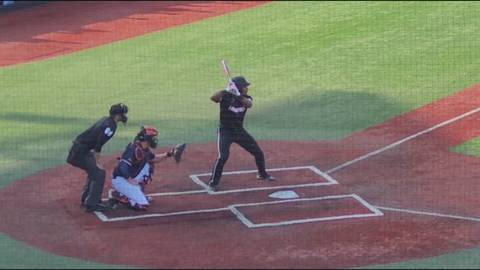
As an added bonus, Rose started in centerfield for the second game of the series which gave the scouts in attendance a glimpse of what could come. It turned out to be a fairly generic look without much action coming his way. Defensively, he was already regarded as an average defender in left field with the arm strength (55-grade) to also play right. Additionally, he’s a plus runner underway and an instinctive base stealer with good acceleration. He ran an above average (4.25) down the line from the right side on a 6-3 RBI ground and didn’t look to be going full throttle.
Scouts also note that Rose has better tools and makeup than former Louisville outfielder Josh Stowers who had a similar build and was also a Chicago catholic school prep, like Rose his first three years of high school. Stowers was a second round pick (No. 54 overall) by Seattle in 2018 and Rose is likely to be selected around pick No. 30 this year.
A preseason favorite, Lucas Moore was trending towards the top 50 overall picks in this year’s draft. However, he had scuffled much of the season, that is, until this season finale series against Virginia. It could be simply a season-long case of draftitis with self-pressure that has been finally left to die, or this series could have been a once great offensive threat going back to the basics and doing what he does best – see the ball, hit the ball. Early in the season Moore simply took too many pitches. His vast number of both walks (45) and strikeouts (46) points in that direction. He was just too selective looking for the perfect pitch to drive in order to get to the power that the scouting industry wanted to see. Last season he had success batting over .300 against every pitch type, but this season he has really struggled vs the fastball (.268) and the changeup (.192) which resulted in many short/medium flyouts to left field and rollovers on the ground to the right side. This weekend none of that was the case. He barrelled everything, including three with EVs over 99 on Saturday. The lefthanded speedster finished the series 6-for-10 with a home run and three RBIs. Even more impressive was his timing, as it was in front of a few scouting directors and other higher level decision-makers. Moore is also a plus to better defender who uses his 70-grade speed to cover gap to gap with ease. His arm is below average, but his lack of power is his real weakness. With a max EV this season of 104.6 mph and an EV90 of just 101.0 he’s a tough fit for selection in the top two rounds of the draft. Overall, there’s a wide range of opinions of where he’ll be chosen and he’s often referenced with Carter Beck (Indiana State) among Midwest scouts as to who will be selected first. The models have Beck higher, much due to the power tool, but many area scouts feel Moore is the better prospect, despite the analytics.
The third 2026 draft-eligible prospect for Louisville this season is senior third baseman Bayram Hot. He’s always been a strong defender with plus arm strength and average raw power (109.4 max EV), but it’s his improvement against the fastball this season (.326 average, up from .280 in 2025) that has helped him connect for a career best nine home runs and 40 RBIs to go along with a .337 cumulative batting average. He’s also swiped 17 bases in 20 attempts and his balanced toolset has placed him into top ten round consideration.
The Cardinals’ pair to watch for 2027 is obviously ACC Player of the Year Tague Davis and a lesser-known prospect at this point, Griffin Crain. Davis has thunder in his bat and is a “different sound guy” that scouts listen for. A potential first round pick next summer, his draft value will likely be hindered by a strikeout rate (25%) unless he can greatly reduce it next season. Regardless, his vast power (70-grade, 115.1 max EV) is the tool that scouts crave and he set the all-time home run record in the ACC with 34. It was the most round-trippers since 31 were slugged by JD Drew (1997) and Brock Wilken (2023). Davis also leads all of college baseball with 98 RBIs, which is 13 more than the second-best.
Crain missed the 2026 draft-eligible date by just two weeks and he also missed all of last season with a shoulder injury. A redshirt freshman this season, the 5-foot-10, 175-pound lefthanded hitter stood out during my first-ever look. He runs plus, defends at a high level and takes the bat to the ball with low chase (15.7%) and whiff rates (14.6%). He lacks average power (30-grade, 104.7 max EV), but there’s not a pitch type that he doesn’t hit well. Currently the everyday rightfielder, Crain is the heir apparent to roam the big field for Louisville next season.
VIRGINIA
Week 14 also marked the return of Eric Becker to the Hoos’ lineup. He had been out of the lineup due to a hand injury since April 16. The 6-foot-3, 190-pound lefthanded hitter was 3-for-6 in his return on Thursday then collected two more singles in eight at-bats over the last two games of the series. A consistent performer with the bat, Becker is a career .351 hitter. He has struggled this year against every type of offspeed pitch, especially changeups. He makes amends by punishing fastballs for a .447 average and .803 slugging. His max EV is 110.6 mph and has a 92nd percentile EV90 of 107.2 mph. Defensively, due to a lack of average range and a frame that will fill out, he’s not likely to remain at shortstop at the next level, but should easily transition to third base where scouts project he’ll add even more power with strength gains to his wide frame that should easily hold an additional 25-30 pounds. Becker is likely to be selected around pick No. 50-60 overall.
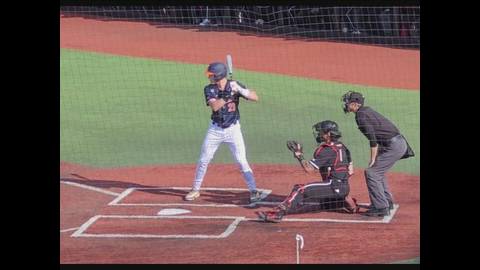
Virginia’s top prospect for the 2026 draft is outfielder AJ Gracia. He checks all the metric boxes led by a 8.6% Z-Whiff, more walks (43) than strikeouts (34), a low (13.8%) strikeout rate and remarkably consistent statistics and analytics each and every one of his three seasons in college. I witnessed his career best 110 max EV when he turned around a 95 mph fastball for a double on Friday. His swing is smooth and easy out of an upright and slightly open stance. He takes professional grade passes and controls the strike zone. Although he projects best to a corner in professional baseball, he’s more reliable and sure-handed in center than a game-changer. With average speed his range is fringe-average in the big field and he’s accumulated a 5.45 DRS per 6-4-3 Charts. A safe, conservative pick, Gracia is likely to be considered starting around pick No. 25.
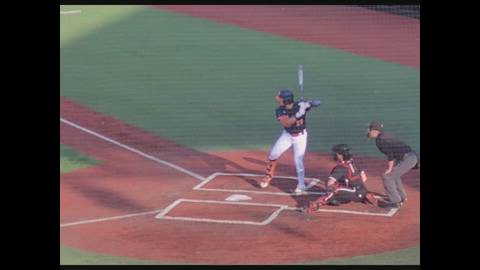
It took Rider transfer Joe Tiroly a half season to get adjusted to ACC pitching, but he’s excelled ever since. The righthanded hitter showed good strength and solid bat speed with power to all fields, although getting the ball in the air to his pull side brings out the best for his plus power (112.2 max EV). The 6-foot, 200-pounder also controls the strike zone with just a 13.9% strikeout rate and doesn’t have any significant weakness against any particular pitch type. He ran with high effort down the line, but produced a near average time of 4.34 from the right side on infield single to third base. Defensively the second baseman showed near average arm strength with average range. Tiroly is likely to be considered in the fifth-to–seventh rounds.
It hasn’t been the junior season that two-way talent Kyle Johnson dreamed about, but he did end the regular season on a high note on the mound with 5.1 innings (89 pitches) littered with plenty of bright spots. The 6-foot-1 lefthander touched 96 and sat 93-94 (2300 rpm) with his fastball and generated frequent whiff and soft contact with his best pitch, a 79-81 (2600 rpm) slurve that he manipulated for different shapes, but was mainly a wide bender. His breaker mix also includes a true 82-84 slider and 85-87 (2700 rpm) cutter. It has limited opposing hitters to a .115 batting average, a miniscule .192 SLG and a 47.4% Whiff (93rd percentile). Due to its slower velocity, his slurve doesn’t grade plus on team models, but it plays there against same-sided college hitters where it has a 95th percentile Whiff of 50%. His 92-96 mph fastball plays below its velocity as it’s a pretty true pitch without much angle from a three-quarter release point. His 84-86 mph changeup was largely inconsistent. The pitch was either a swing/miss offering with late life down in the zone or it was elevated and battered for extra bases, including a home run to centerfield by Bayram Hot. Overall, despite the less than spectacular season, Johnson is athletic and possesses a mid-90s fastball and a highly effective breaking pitch and he’s likely to be considered in the fifth-to–seventh rounds this summer.