
2027 Draft-eligible Hitters of the USA Collegiate National team
August 3, 2026

*Denotes a member of the final 28-man CNT roster
Trey Callaway, C, Alabama State- Defense-first backstop who showed a quick release and plus accuracy with fringe-average arm strength. Displayed below average bat speed at the plate and struggled against spin. In limited trips to the plate, Calloway went 0-for-10 with a pair of walks and four strikeouts.
*Tague Davis, 1B, Louisville- Swing/miss plagued Davis as he struggled in the box throughout the CNT season. The lefthanded hitter possesses both plus bat speed and bat strength, but struggled to make much contact. Some may be due to the late bat tilt in his load that could affect the consistency of his bat path, but there’s likely more to it. A semifinalist for the Golden Spikes award Davis’ mainstream college numbers look really nice; .355 average, 34 HR, 98 RBIs. However, digging a little you’ll find his bat-to-ball and chase are worse than Vance Honeycutt who was the 22nd overall pick in 2024, but is a career .175 hitter with 309 strikeouts in 636 minor league at-bats, all below Double-A. Davis’ metrics are also much worse than Jace LaViolette (2025, 1st round) who is batting .237 with 133 strikeouts in 299 at-bats in high-A. However, Davis did not struggle during batting practice. He received scouting comps to former Atlanta Braves slugger Ryan Klesko. David also impressed defensively with sure hands and nifty footwork around the bag. He’s a difference maker at first base as his glove is already big-league caliber. Overall, Davis’ draft position will be a fascinating case. Despite posting big numbers, will he follow the 2024-2025 trend of similar sluggers mentioned above who were nonetheless selected in the first round or could he fall into the most recent 2026 draft trend with Sawyer Strosnider (2nd round) and Gavin Grahovac (3rd round)? Time and development will tell, but at this point it’s safe to say his tools and the analytics place him in the second-to-third round bucket, despite elite performance statistics.
*Hogan Denny, OF/C, Indiana- Squatty-bodied at 6-foot, 220 pounds with very good body strength, Denny showed plus power and a better-than-plus arm from left field. He also had quick feet on the bases, but a short stride produced below-average run times (4.14 bunt, 4.49 grounder to SS). In the batter’s box the righthanded hitter had a keen eye and a great approach of selective aggressiveness. His on-base in training camp exceeded .500 and he singled once in seven trips to the plate during the championships in Taiwan. He’s also a front-foot hitter that can be pitched to with a back/forth mix. Over the long term Denny does not profile as a catcher and will likely be limited to left field and first base.

Thomas Ealey, OF, Norfolk State- Six-foot-4, 185-pound long-legged, long-striding outfielder. Deceptively fast with plus-plus speed (H-1B times of 4.06, 4.14, and a blazing 3.62 on a bunt single). Long swing at the plate which was somewhat expected given his extra-long arms. Went 0-for-3 in limited use during the Trials.
*Chase Fralick, C, Auburn- Physical backstop (6-foot-2, 225 pounds) popped a 1.97 on a caught-stealing attempt showing near-average arm strength which should be just enough to stay behind the plate over the long term. Fralick received and blocked well and he did not commit an error. He also showed an advanced feel for calling the game and leading the pitching staff. Fralick also produced key hits in big situations throughout the CNT season as he continued to produce very good contact rates with some power just as he has done at Auburn in each of his first two seasons. He’s a potential top 20 overall pick who profiles as an everyday catcher at the Major League level.
*Trent Grindlinger, C/1B, Tennessee- A draft-eligible sophomore, Grindlinger collected just six at-bats during training camp before a short term injury. He recovered and added six more at-bats in Taiwan, starting one game behind the plate and finishing another. The 6-foot-2, 210-pound righthanded hitter has above average raw power that he’s able to get to during games. His arm strength is at least average and has a chance to remain behind the plate over the long-term, although first base or a corner outfield is also a possibility. He reminds me of Easton Carmichael, a 3rd round pick out of Oklahoma in 2025, in this regard. Grindlinger also has very similar statistics to Carmichael at the same age that include batting average, ISO, K rate, BB rate.
*Landon Hairston, OF, Arizona State- His violent-impact swing that utilizes his entire body is fun to watch. It can also be difficult to consistently repeat, but Hairston largely avoided that pitfall throughout his entire spring season for the Sun Devils as he mashed his way to a .400/.507/.860 slash with 28 HR and 81 RBIs. He didn’t come close to that type of production with the CNT as his swing/timing were just a tick off. Ironically, he batted .188 (3-for-16) with one home run at both the Trials and Taiwan. After playing mostly centerfield for the Sun Devils, he shifted to left field and some first base for the CNT, with the former his most likely long term spot at the pro level. He throws below average and runs average underway, but below average down the line, clocking a 4.44 and 4.45 H-1B on my watch. Hairston is a no-doubt top half of the first round talent and can roughly be compared to Zion Rose who was recently selected sixth overall by the Royals, albeit at a $2M discount.
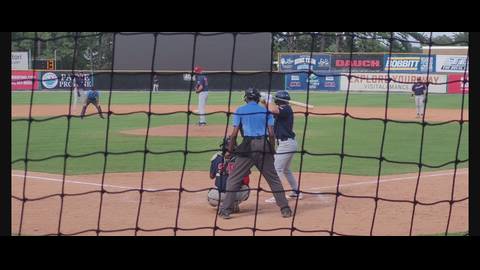
*Rett Johnson, CF, NC State- A draft-eligible sophomore for 2027, Johnson is likely to be highly valued with today’s industry emphasis of bat-to-ball. His z-contact rate (93.4%) during the 2026 college season exceeded those of Jarren Advincula, Ty Head and Tre Broussard – all were top three rounders in this year’s draft. This group is also very comparable as all have 30-grade raw power, except Johnson who has 20 juice. He makes up for this lack of pop with elite on-base skills (.490 OBP, 42 BB vs 17 SO) and a 70-grade run tool that he’s able to put to use on the bases and in the outfield. He stole 14 bases in 54 games for the Wolfpack, but was much more aggressive with the CNT during the Trials, stealing seven in nine attempts. His fringe-average arm strength is more than enough for centerfield and he’ll likely move there this spring as Ty Head has moved on. The 5-foot-9, 170-pound lefthanded hitting Johnson profiles as an old-school table-setting leadoff man at the Major League level. Currently, his draft value is somewhere around the 3rd to 4th rounds, but off-season strength gains and a boost in exit velocities next spring will only raise his draft value.
Brodie Johnston, 3B, Vanderbilt- The 6-foot-2, 220-pound righthanded hitter can put on a show with plus power to all fields in batting practice (113.8 max EV this past spring). However, his slider bat speed and excess chase mostly due to struggles to identify spin put a damper on his time in the batter’s box for the CNT. There’s also some length to his swing that was exploited with velocity and a wood bat. Defensively, he’s made tremendous strides since his freshman season at Vandy. He’s now likely to remain in position at the next level with plus arm strength his greatest tool. Johnston is also an average runner underway. For some, he is a back half of the first round prospect at this point. A bit more conservative, he’s a better fit in the second-to-third round for me, but with swing adjustments and improved bat-to-ball (8th percentile chase rate and 37th percentile z-contact rate), he could wind up with first round considerations by next summer.
*Gavin Kelly, C/2B, West Virginia- After his power took a leap from his freshman year (2 HR) to sophomore (19) for the Mountaineers, Kelly was the CNT’s top hitter during the Trials and World Championships combined. In Taiwan he batted .474 (2nd on the team) with a team-leading .737 SLG and 1.237 OPS. His bat stays through the zone a long time with above average bat speed. Long term projection his hit tool could be plus (.270-.285 batting average) with at least average power production (15-20 HR) over the course of a 162 game MLB season. Kelly is also a versatile defender. For West Virginia he rotated between second base and catcher and for the CNT he occupied the three-spot in the order as the DH, but ultimately fits the valuable role of super-utility in the big leagues – think a Ben Zobrist type who can also catch on occasion. Overall, Kelly profiles as a top ten overall pick for next summer.
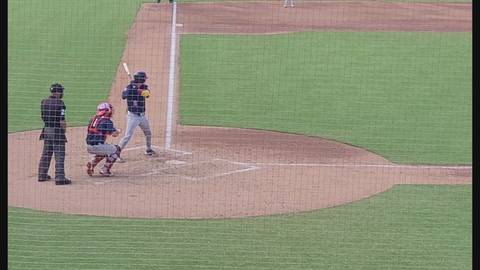
*Derrick Pitts, OF, Cincinnati- Filling out the uniform at 6-foot-2, 210 pounds and loaded with tools and athleticism, Pitts is a fast-rising 2027 centerfield prospect. He possesses three plus tools (speed, arm, defense) and most importantly, he turns those tools into game skills/abilities. He’s a base stealer who also runs sub 4.3s from H-1B on a consistent basis. His accurate arm is an extra base stopper and he’s widely viewed as one who could win multiple Gold Gloves in time at the Major League level. At the plate, the righthanded hitter showed very good hand/eye in BP and a skilled approach in the game. He led the CNT with .500 (8-for-16) batting average in Taiwan while also excelling at the Trials – .364/.462/.545 in 11 at-bats with two doubles, two RBIs and 2-for-2 stolen bases. At this point the high-energy Pitts is a top 40 overall prospect with the floor of fourth outfielder, yet a high ceiling as future plus-plus defender up the middle who could also impact a lineup.

Chris Ramirez, SS, Tennessee- The to-be Tennessee Volunteer made it look easy in the field but was overmatched at the plate, especially against velocity, missing several center-cut fastballs. During Trials he slashed .111/.429/.111 over a small sample of 16 plate appearances. He also walked five times and stole one base in three attempts. He ran plus down the line, but was surprisingly a poor bunter, at least what was observed during pre-game. He’s received scout comparisons to Maui Ahuna, a 4th round pick in 2023, but with less power and better contact rates. Ramirez’s max EV was 30-grade at 104.9 mph this spring and his in-zone whiff was 86th percentile. He profiles as an extra infielder at the Major League level and likely a 3rd-to-4th round pick next summer unless his EVs take a large leap.
Julio Solier, SS, Boston College- Another talented shortstop at Trials who had no difficulty posting high EVs (108.1 EV90) this spring season is the strong-bodied Solier. He’s a 6-foot, 190-pound athlete with good tools at a premium position. There’s limited physical projection remaining, but there’s no lack of present strength and bat speed with quick hands at the plate. There are some concerns with load and swing path, especially for a hitter with this type of EVs. Solier is also a plus runner and smooth defender at shortstop. He’s easily a top two round prospect at this point.
*Ryker Waite, SS/2B, Vanderbilt- Although some of his bounce and quick-twitch didn’t show as well during the Trials as it did last summer for me in the Cape, the 5-foot-9, 185-pound middle infielder is a plus runner with above-average arm strength and good actions on the dirt. He also shows above-average range. Offensively, he’s more of an on-base guy than a pure hitter, but he does have some sneaky, twitchy pop (a full grade more as a lefthanded batter) that he shows in games. During Trials the switch-hitter batted .294/.455/.529 in 17 at-bats over eight games. He was also 3-for-3 in stolen bases and did not commit an error in 29 chances. In Taiwan he scuffled a bit at the plate, posting a .182/.400/.364 slash, but had a continued strong OBP. Waite projects as a high-floor middle infielder with on-base skills and defensive reliability. He’s a top three round prospect, ahead of Ramirez, but behind Solier for me at this point.